
Your Cycle Isn’t Random: It Has 4 Phases
The menstrual cycle is often reduced to just “your period.” But in reality, it’s much more than that. It is a monthly, hormone-driven cycle that affects your entire body; from your brain to your energy levels.
What Is the Menstrual Cycle?
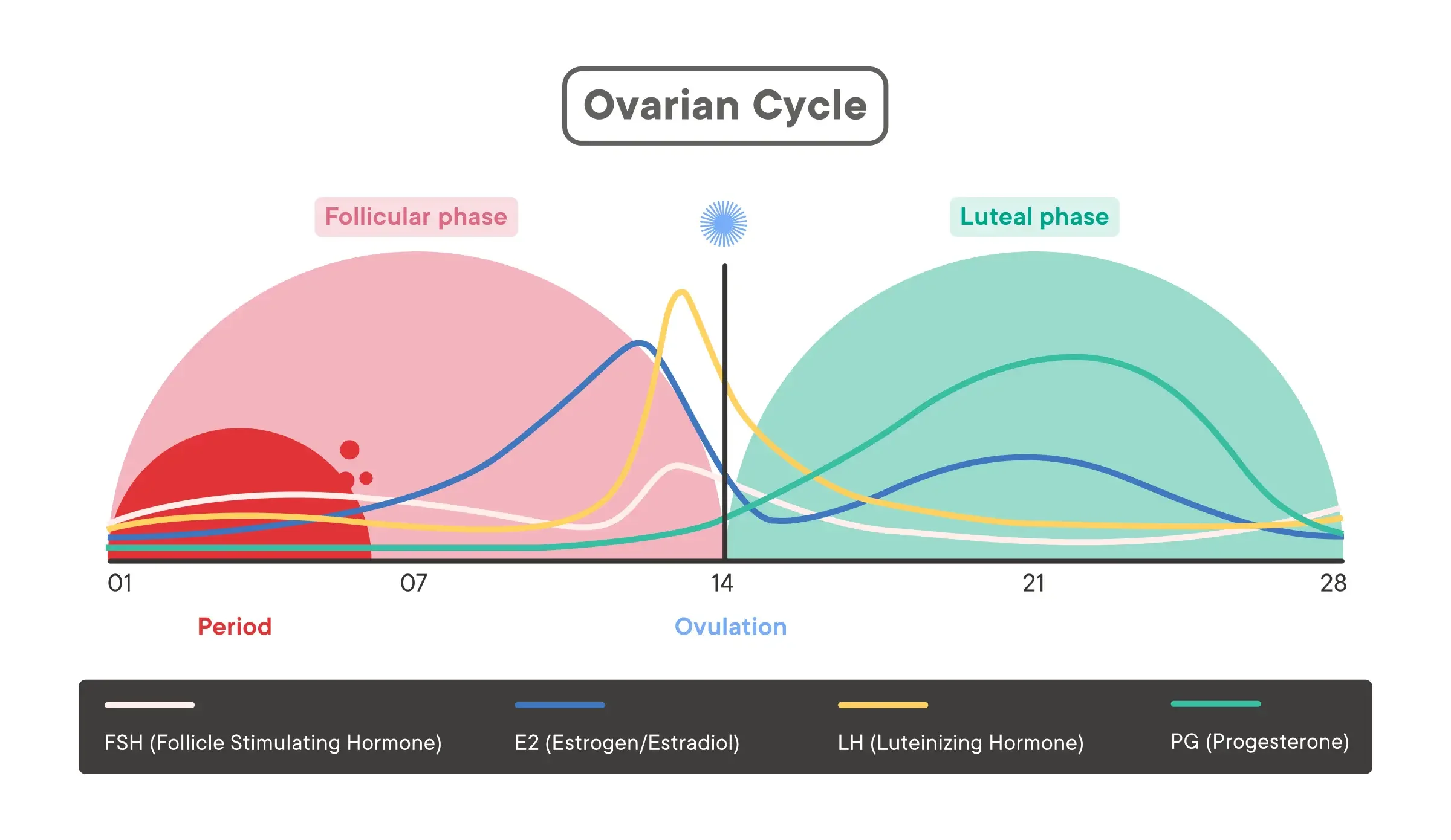
The menstrual cycle is the recurring set of hormonal changes that prepares the body for a possible pregnancy. It involves communication between: The brain, The ovaries, and The uterus, and it repeats roughly every 21–35 days. The cycle is not just your period, it also includes everything that happens between periods.
The 4 Phases of the Menstrual Cycle
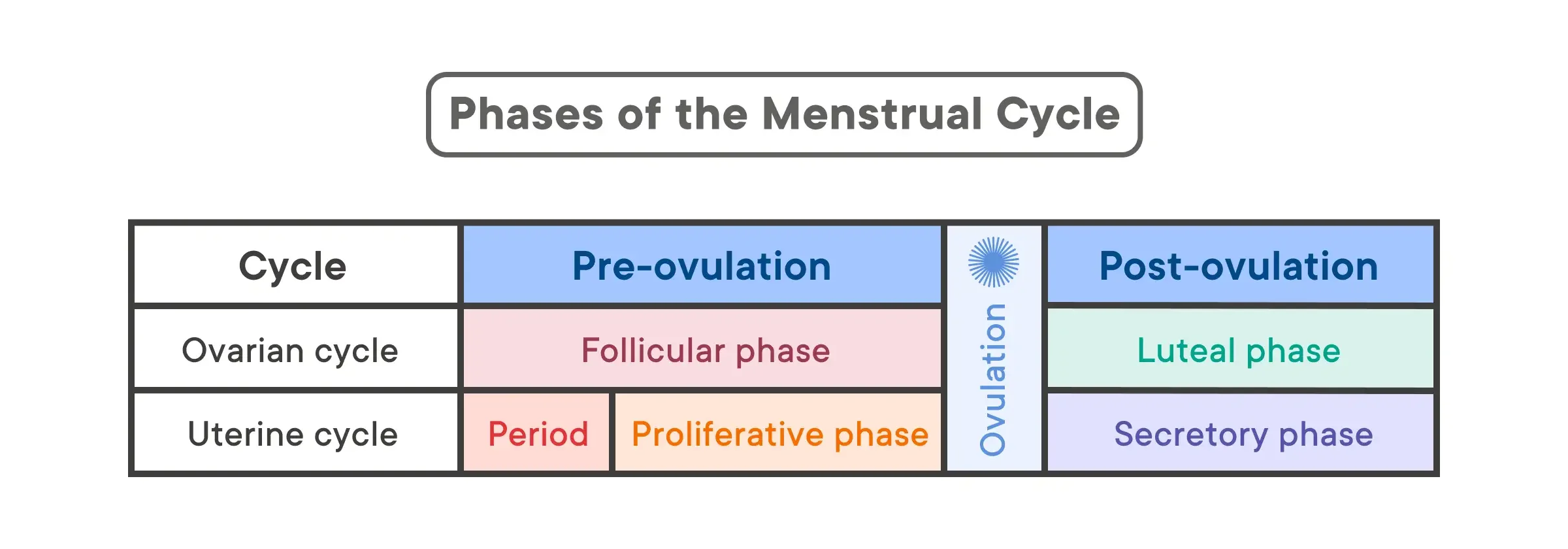
Each cycle has four distinct phases. Each one has a purpose and a different hormonal environment.
Follicular Phase (≈ Days 1–14)
What’s happening: The brain signals the ovaries to mature follicles (each containing an egg)
Hormones: Estrogen gradually rises
What you might notice:
Increasing energy
Better focus
More motivation
This phase overlaps with your period at the beginning, then continues until ovulation.
Menstrual Phase (≈ Days 1–5)
What’s happening: The uterine lining sheds (your period)
Hormones: Estrogen + Progesterone - LOW
What you might notice:
Lower energy
More need for rest
Inward focus
This phase marks the start of a new cycle.
Luteal Phase (≈ Days 14–28)
What’s happening: The body prepares for a potential pregnancy
Hormones: Progesterone rises, then falls if pregnancy doesn’t occur
What you might notice:
Calmer energy at first
Then possible fatigue, mood shifts, or PMS
The luteal phase tends to be more consistent in length (~14 days), even if your overall cycle varies.
Ovulation (Mid-cycle, ~Day 14)
What’s happening: A surge in luteinizing hormone (LH) triggers the release of an egg from the ovary
Hormones: Estrogen peaks, then briefly drops
What you might notice:
Higher energy
Increased confidence or sociability
Peak fertility
Ovulation is a short but key event in the cycle.
Why This Matters
When you don’t understand your cycle, it can feel like:
Your energy is unpredictable
Your mood changes randomly
Your body is inconsistent
But these changes are often aligned with your hormonal shifts. The menstrual cycle is a rhythmic biological process, not random chaos.
How Your Cycle Affects Your Body
Hormonal changes across the cycle can influence:
Energy levels
Mood and emotions
Sleep
Appetite
Focus and productivity
Research using large-scale cycle tracking data shows that symptoms and experiences often follow patterns tied to cycle timing.
Recognizing the Pattern
You’re not inconsistent, unmotivated, or ‘all over the place’, you are likely experiencing normal hormonal variation across the month.
The Takeaway
Your symptoms follow a pattern even if you haven’t noticed it yet. When you begin to understand your cycle, you can:
Anticipate changes in energy and mood
Make sense of symptoms
Work with your body instead of against it
Final Thought
Your cycle isn’t just something to manage. It’s something to understand. And once you see the pattern, it becomes a lot easier to navigate.
References