
Hormones Change Throughout Your Life (And That’s Normal): A Simple Guide to Understanding Your Body
If you’ve ever felt like your body is unpredictable or “off,” you’re not alone. Many women experience shifts in energy, mood, sleep, and cycles and often assume something is wrong, but here is the truth: Your body isn’t broken—your hormones are changing.
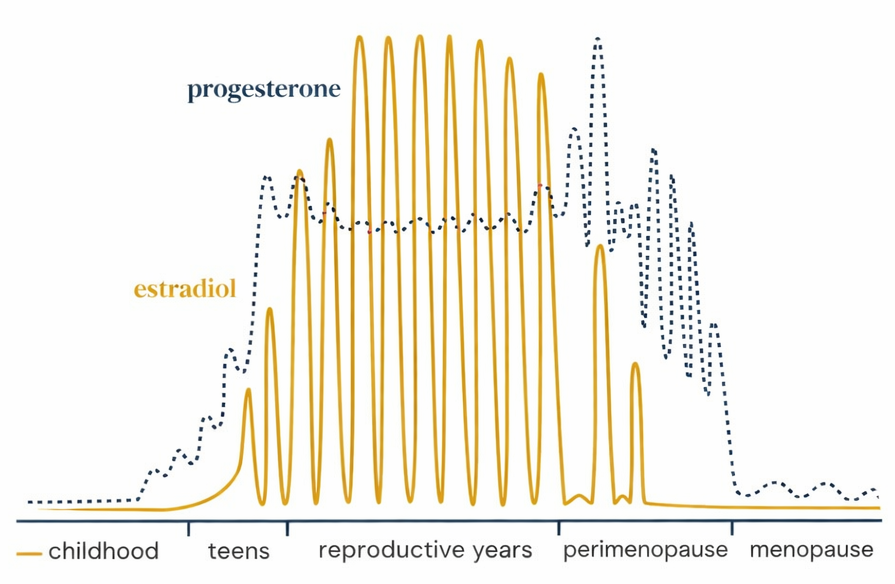
Your Hormones Evolve
Hormones are not static. They don’t stay the same year after year. Instead, they:
Rise
Peak
Fluctuate
Gradually decline
This isn’t chaos—it’s normal human physiology. What often feels confusing or frustrating is actually part of a predictable pattern across your lifespan.
The Lifespan Hormone Curve (Simplified)
Think of your hormones as following phases, each with its own rhythm and experience:
1. Puberty (The Starting Point) - This phase can feel irregular because your system is still “learning.”
Estrogen begins to rise
Your first menstrual cycles begin
Your body learns how to ovulate
2. Reproductive Years (Rhythmic Cycles) - For many women, this phase feels the most stable hormonally.
Hormones follow a more predictable monthly pattern
Estrogen and progesterone rise and fall in cycles
Ovulation becomes more consistent
3. Perimenopause (The Transition Phase) - This is where things start to feel different and often confusing.
Estrogen becomes erratic (not just low)
Progesterone gradually declines
Cycles may shorten, lengthen, or become irregular
Hormones are usually quite stable until about 3–5 years before menopause. Then variability increases significantly, hence the reason symptoms seem to appear ‘out of nowhere’.
4. Menopause (A New Baseline) - While this stage is often feared, many women find greater stability again once the transition is complete.
Estrogen and progesterone remain consistently low
Cycles stop completely
The body adapts to a new hormonal normal
Why Your Symptoms Change Over Time
Because your hormones are changing, your symptoms will too. You might notice:
Energy shifts
Mood changes
Sleep disruptions
Changes in your cycle
Differences in metabolism
These aren’t random, they often reflect what your hormones are doing beneath the surface.
Reframing the Experience
What many people describe as “My body feels out of control” or “Something is wrong with me” is often a new hormonal phase, different physiological pattern, or a normal transition the body is designed to go through.
The Takeaway
Your body isn’t broken—your hormones are changing.
When you understand the phase you’re in, things start to make more sense:
Your symptoms feel less random
Your expectations become more realistic
You can support your body more effectively
Final Thought
Your hormones are not working against you, they are evolving with you. The more you understand these shifts, the more empowered you’ll feel navigating each stage of life.